
India has completely protected the interests of its agriculture and dairy sector in the India-US trade agreement.
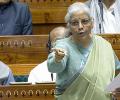
Finance Minister Nirmala Sitharaman launched a strong attack on Rahul Gandhi and the Congress party, accusing them of compromising India's interests on the world stage and selling out farmers and the poor during their time in power.
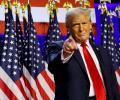
American President Donald Trump has announced imposing reciprocal tariffs on its major trading partners including China that levy higher import duties on goods shipped from the United States. He has already announced a 25 per cent duty on steel and aluminium imports, which will come into effect from March 12.
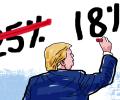
'Trump says India will buy over $500 billion of US goods.' 'At present, India's annual imports of goods and energy from the US are under $50 billion.' 'Reaching $500 billion would likely require more than 20 years, suggesting the figure refers to a long-term aspiration rather than a near-term commitment.'
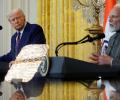
'But I don't think the government is in a great hurry to sign the BTA.'
For India, the challenge is to strike a balance between tactical necessity and economic priorities, point out Pravin Krishna and Monil Sharma.
The minister, at a packed press conference, made it clear that New Delhi was not prepared for any compromise on the food security issue, adding the deal at Bali has to be fair and balanced as 'it is better to have no agreement than a bad Agreement'.
India and the US have concluded the fifth round of talks for the proposed bilateral trade agreement (BTA) in Washington. Both sides are looking at finalising an interim trade deal before August 1. Issues related to agriculture and automobiles figured during the negotiations.

The fate of the ministerial conference was sealed after assistant US trade representative Sharon Bomer Lauritsen said permanent solution to the food stockholding issue was not acceptable to America.
The deal fell through over unresolved disagreements over contentious issues, mainly on agriculture and automotive sector tariffs.

.jpg)
If India does not wish to continually violate the WTO rules, it must also continue to push the WTO to either revisit the reference point of 1986-88 prices for calculating subsidies and pitch it at a recent period, or raise the ceiling on subsidies to enable countries like India to stay within the envisaged cap.

An Indian commerce ministry team has reached Washington for another round of talks from Monday on the proposed bilateral trade agreement (BTA), an official said. Chief negotiator of India and special secretary in the Department of Commerce, Rajesh Agrawal, will join the team on Wednesday.
Commerce Minister Piyush Goyal assures Parliament that India will take necessary steps to protect its national interests following the US announcement of tariffs on Indian goods. The government is assessing the implications and engaging with stakeholders.
An Indian commerce ministry team will soon visit Washington for another round of talks on the proposed trade agreement with the US to iron out differences in sectors, like agriculture and automobiles, a government official said on Thursday.
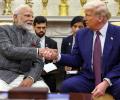
'I certainly hope the two can avoid a trade war and believe they will.' 'I expect some in India will push for retaliatory tariffs if the Trump administration applies significant reciprocal tariffs.'

Commerce secretary Sunil Barthwal is set to attend a two-day meeting from October 23 at the World Trade Organization (WTO) headquarters in Geneva, that would focus on finding solutions and giving the 'necessary political push' for at least some crucial global trade issues. Next week's meeting comes ahead of the WTO's 13th ministerial conference (MC13), scheduled in Abu Dhabi in February 2024. It will see participation of senior government officials from all WTO member nations.

Addressing the food security concerns is important as India is still has 190 million hungry people, Cabinet Secretary Ajit Seth said at an event organised by a global think-tank The Club of Rome.

India and other developing nations, on the other hand, want the peace clause until a permanent solution is found on the matter for smooth implementation of the food security programme.

According to the final draft of the negotiating text circulated by WTO Director-General Roberto Azevedo among trade ministers of the 159 member countries on Wednesday night, on public stockholding for food security purposes, a developing country like India can provide subsidies for farm support even if those exceed the permissible 10 per cent cap.
The WTO has fixed an external reference price (ERP) for rice at Rs 3.52 per kg
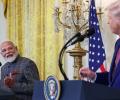
Of Trump's reciprocal tariffs and trade deals
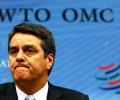
When asked about the possibility of talks getting extended for another day, World Trade Organization spokesperson Keith Rockwell said: "The concept of time is flexible in WTO."

In a major development, India and the US have agreed to end six trade disputes at the WTO through mutually agreed solutions, while New Delhi will remove retaliatory customs duties on certain American products such as almonds, walnuts, and apples.
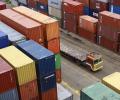
The US Trade Representative noted that India's average applied tariff rate stood at 17% per cent, the highest of any major world economy.

As hard bargains continue for the next four days at the picturesque tourist resort of Indonesia, the ministers., including from the influential developed countries will try and reach agreements on providing windows to the developing nations for their food security programmes and a pact to free the global trade from the procedural hassles at the customs.
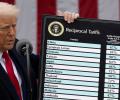
US President Donald Trump has proposed a deal to China that would see the sale of TikTok's US operations to an American buyer in exchange for a reduction in tariffs on Chinese exports to the US. The proposal comes amid a trade war between the two countries and follows China's retaliation of Trump's tariffs on Chinese goods. Trump has also said that tariffs are a powerful economic tool and that he is determined to ensure fair trade between the US and China.

Agreement 'endorsed' by members and being legally vetted but will be part of the main Doha agenda only after a tenuous process.
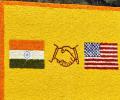
The Budget has given signals that India is sensitive to the US needs and willing to walk the extra mile, but if need be, we should respond in equal measure as a sovereign nation, notes Ajay Srivastava.
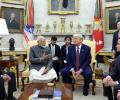
'No retaliatory tariffs now. You can retaliate after a few months.' 'Today, there is no need to retaliate because it is a question of long term benefits.'

Developed nations want the WTO to discuss new issues.
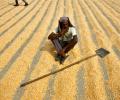
India is in no danger of crossing the 10 per cent threshold of food subsidies under the WTO's agreement on agriculture and it will not breach the level in the near future.
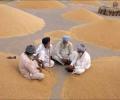
India is threatening to block the World Trade Organization (WTO)'s trade facilitation agreement (TFA) reached at Bali last year unless its agricultural policies are permanently excluded from multilateral scrutiny.

India continues to apply import quotas on marble.
According to a senior commerce department official, though India is ready to sign the TFA and take necessary actions towards that, it is imperative that a discussion on public stockholding gets its due importance.
This will be an area where bilateral or regional trade pacts may not be able to perform well.

According to the Morcha, the demands which Delhi Chalo has been called include: MSP should be guaranteed as per C2+50 percent formula and, as promised, a law should be made to guarantee it; all the farmers should be made debt free, and all agricultural loan must be waived.
 © 2026 Rediff.com - Advertise with us - Disclaimer - Privacy Policy - Sitemap - Feedback - About us - Terms of use - Grievances